
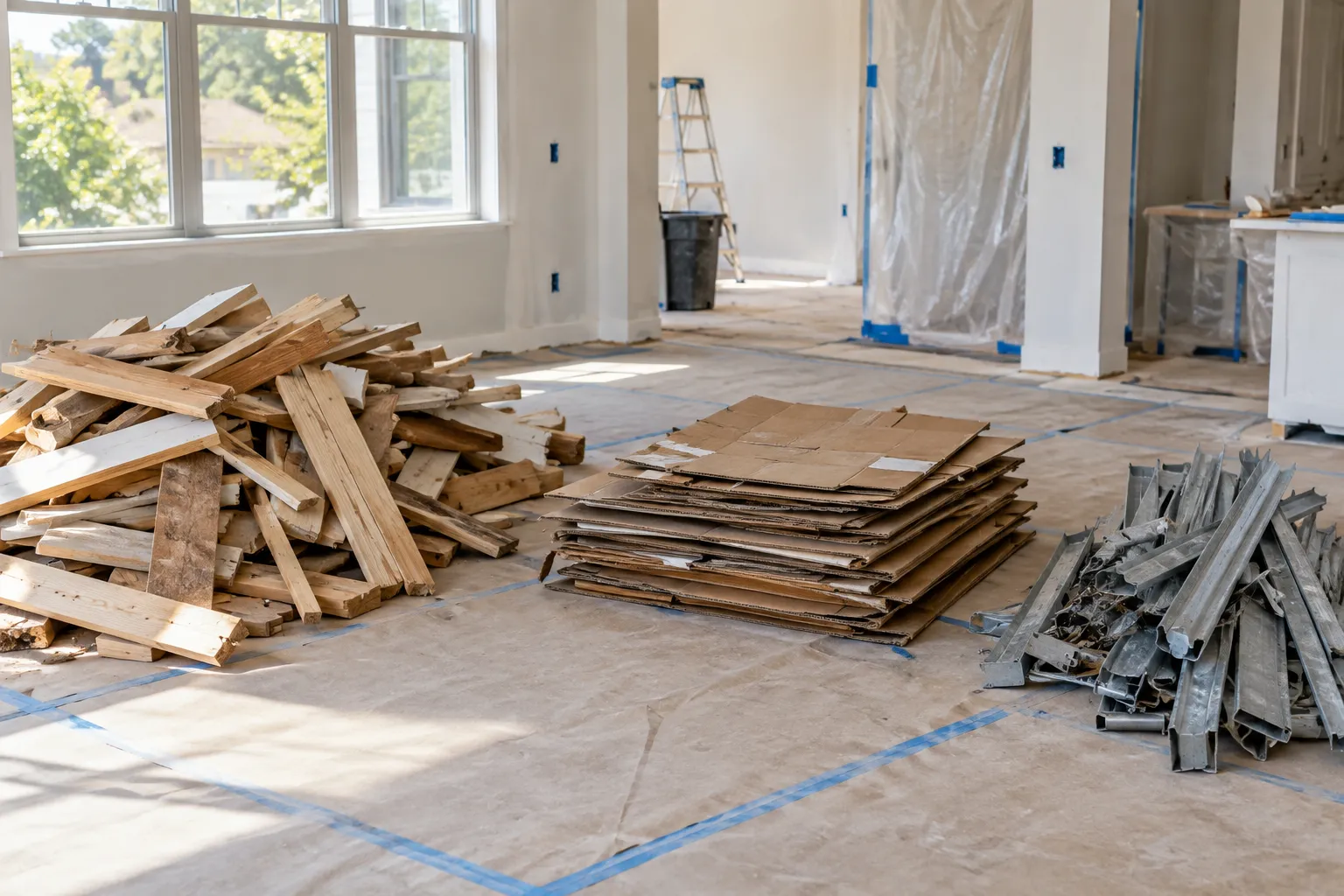
Sort renovation debris by material and risk, not by which pile is closest. Keep reusable fixtures intact, separate clean metal and cardboard, isolate heavy masonry, and stop when paint, asbestos, chemicals, or unidentified material may be involved.
Start with four zones
| Zone | Examples | Next decision |
|---|---|---|
| Reuse | Undamaged doors, hardware, cabinets, fixtures | Confirm that a recipient accepts the condition and dimensions |
| Recycle | Clean metal, flattened cardboard, eligible untreated wood | Ask the receiving facility how materials must be separated |
| Ordinary C&D debris | Drywall, broken lumber, tile, mixed non-hazardous debris | Estimate volume and weight by material |
| Stop and assess | Wet chemicals, suspect asbestos, lead-painted dust, mercury devices, unknown containers | Do not mix or move casually; contact the proper authority or qualified contractor |
The EPA describes construction and demolition material as debris from building, renovation, and demolition work. Its examples include concrete, wood, asphalt, gypsum, metal, brick, glass, plastics, and salvaged building components. It recommends source reduction, reuse, salvage, and recycling where appropriate. EPA construction and demolition materials guidance (updated March 18, 2026; United States; retrieved October 8, 2026).
Keep heavy material separate
Concrete, tile, brick, soil, and plaster can become heavy long before they fill a truck. Tell the hauler about them instead of burying them under lighter debris. Use small stable containers only when the provider approves them; an overfilled tote can be impossible to move safely.
Do not add water to dusty material, and do not sweep or disturb material you suspect may contain asbestos or lead. This guide does not identify hazardous building material. Pause the job and get qualified advice when the material, building age, or prior testing raises a concern.
Protect salvage value
Remove screws and loose hardware only when it is safe, keep matching parts together, and record measurements. Ask the recipient before doing extra work. A donation center may reject an item because of condition, missing parts, demand, or storage limits even when the item seems useful.
Debris sorting checklist
- Photograph the material before it is mixed.
- Set aside reusable doors, hardware, fixtures, and cabinets without damaging them.
- Flatten clean cardboard and keep it dry.
- Group metal separately from wood and drywall.
- Tell the provider about concrete, tile, brick, soil, and other dense material.
- Keep wet paint, solvents, fuel, cleaners, pesticides, and pressurized cylinders out of the debris pile.
- Stop when a material is unidentified or may contain asbestos, lead, mercury, or another regulated substance.
Tennessee hazardous-waste separation
Tennessee’s household hazardous-waste program says to keep waste in original containers when possible, keep labels intact, never consolidate or mix materials, and avoid transporting damaged or leaking containers. Its mobile collections do not accept every material or business waste, so check the current program before transport. Tennessee Household Hazardous Waste Program (retrieved October 8, 2026; Tennessee).
Once the piles are defined, review construction debris removal and call with the material list, approximate pile dimensions, and access path.