
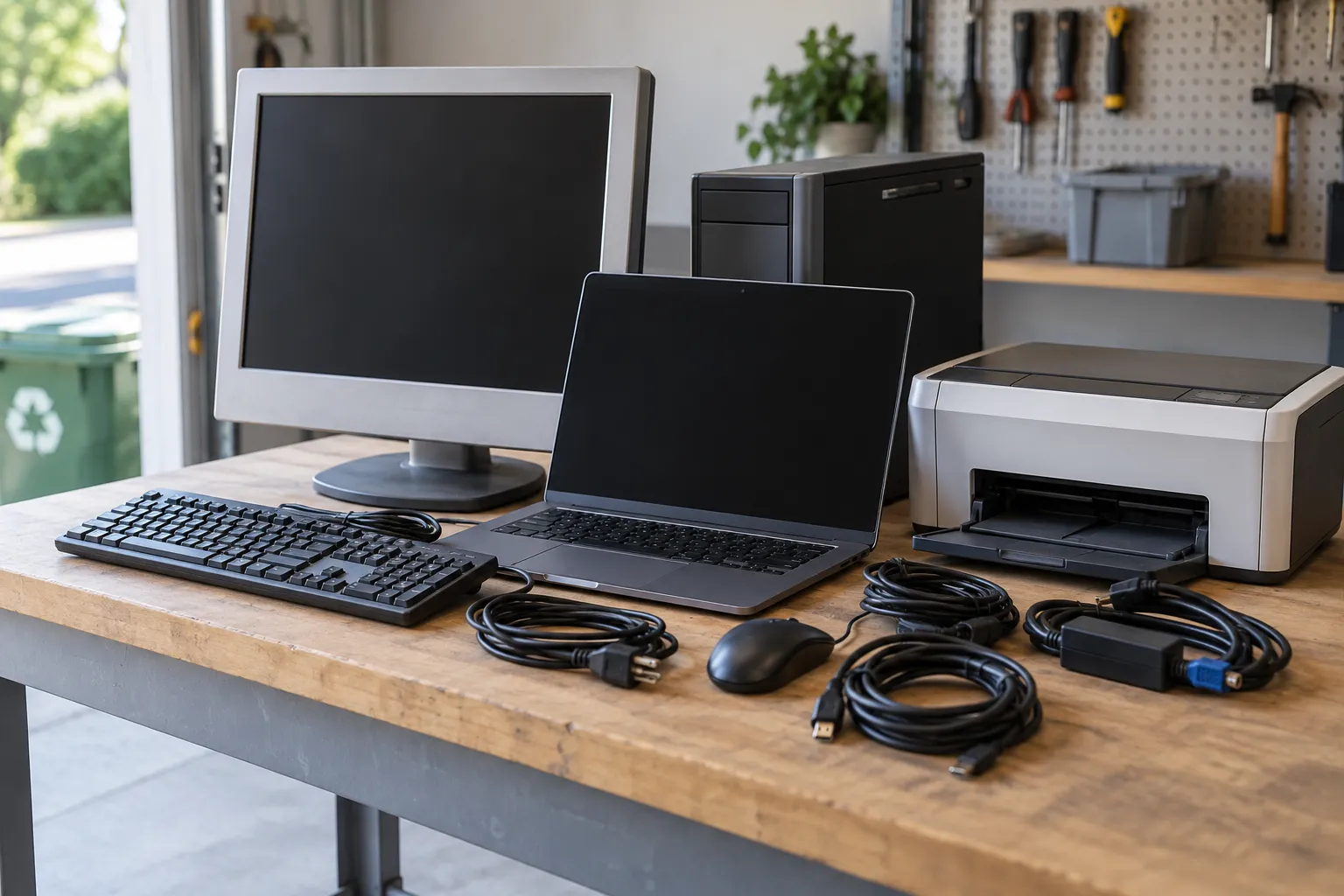
Working electronics usually deserve a reuse check first. Broken or obsolete devices need a recycler or collection program that accepts the exact device. Before either route, back up what you need, remove personal data, sign out of accounts, and separate removable batteries.
Use this decision order
| Device condition | Best first question | Likely route |
|---|---|---|
| Works and still receives security updates | Can a person or organization use it safely? | Reuse, resale, or an accepting donation program |
| Works but is too old for your needs | Does the manufacturer, retailer, or refurbisher accept it? | Take-back or refurbishment |
| Broken, obsolete, or physically damaged | Which local program accepts this device type? | Electronics recycler or local collection site |
| Swollen, hot, punctured, or damaged battery | What safe handling route does the local authority require? | Stop handling and contact the appropriate battery or hazardous-material program |
Prepare data-bearing devices before they leave
Make a backup, sign out of cloud and device accounts, remove SIM and memory cards, and follow the device maker’s current reset instructions. A reset is not the same as a guarantee for every storage device, so businesses and anyone handling sensitive records should ask a recycler about documented data destruction.
The EPA tells consumers to delete personal information, remove batteries when possible, and check state or community recycling options. It also notes that lithium-ion batteries and devices containing them should not go into household trash or curbside recycling. EPA Electronics Donation and Recycling (retrieved October 8, 2026; United States).
Tennessee options depend on the item and county
Tennessee’s BOPAE program covers batteries, oil, paint, antifreeze, and electronics through county and city convenience centers and other collection sites. The state’s electronics guidance lists reuse, recycling, energy recovery, and disposal in that order of preference, and it advises residents to contact local solid-waste departments or recyclers for current acceptance. Tennessee BOPAE guidance (retrieved October 8, 2026; Tennessee).
Acceptance changes by facility. A television may follow a different route from a phone, printer, or laptop. Ask about fees, quantity limits, drop-off hours, business restrictions, and whether data-destruction documentation is available.
Electronics handoff checklist
- Record the device make, type, and approximate size.
- Back up files and verify the backup.
- Sign out of accounts and remove activation locks when appropriate.
- Remove SIM cards, memory cards, and removable batteries.
- Keep battery terminals from touching metal; follow the receiving program’s packaging instructions.
- Ask whether televisions, CRT monitors, printers, and business equipment are accepted.
- Keep a receipt or destruction certificate when your records require one.
What a hauling company can and cannot settle
A hauler can move accepted electronics and help separate them from an ordinary load. The receiving facility decides what it accepts and how it processes the device. Confirm that route before the item is loaded, especially for televisions, monitors, batteries, and business equipment.
See the electronics recycling service page, or compare this guide with the items we take list.